
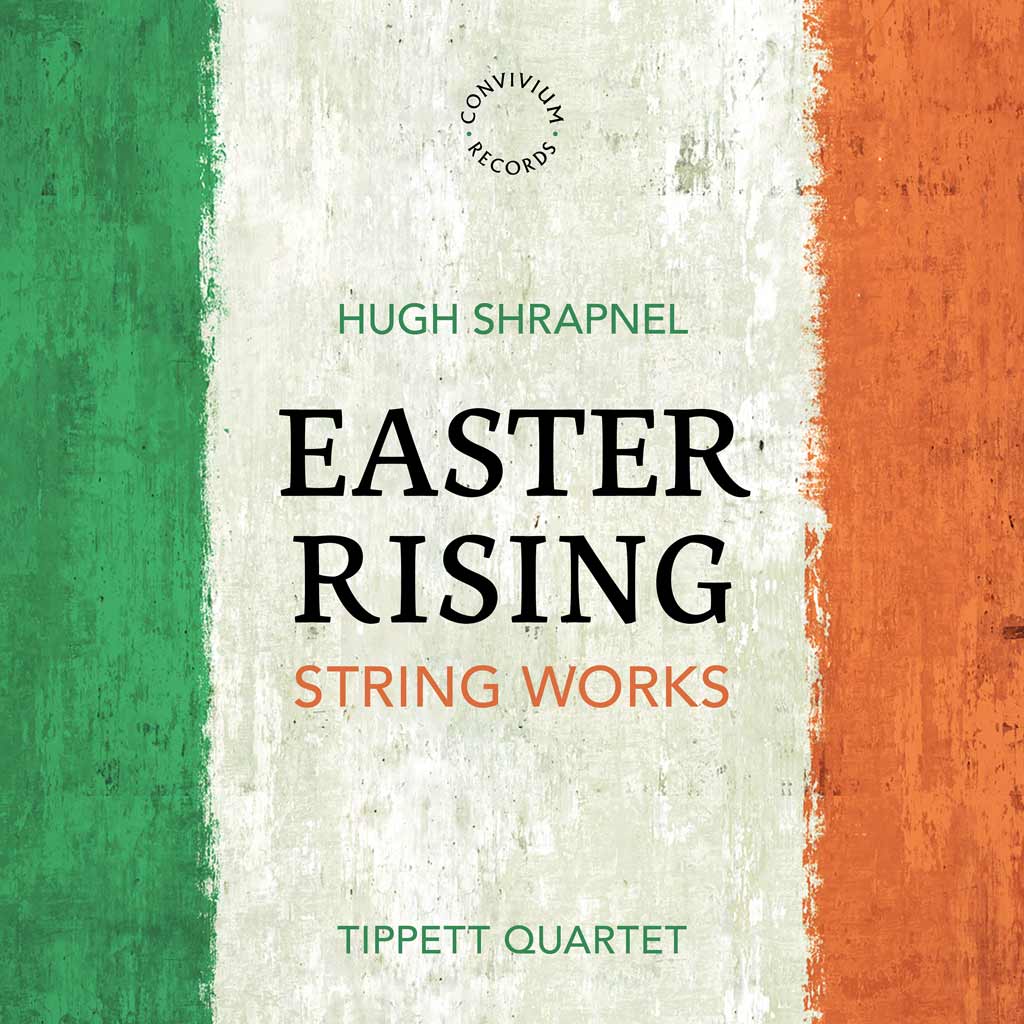
Easter Rising – Review by BBC Music Magazine
“A perfect sense of pace and natural flow... at a time when post-classical blandness threatens to overwhelm modern music it's good to be reminded that there are still alternatives." ★★★★
12th August 2026
Easter Rising – Review by BBC Music Magazine
“A perfect sense of pace and natural flow... at a time when post-classical blandness threatens to overwhelm modern music it's good to be reminded that there are still alternatives." ★★★★
12th August 2026
Listen or buy this album:
Despite its apparent self-containment, the British school of experimental music, partially detaching itself from the work and ideology of composer Cornelius Cardew in the late 1960s, produced an enigmatic yet active diaspora. By way of example, Cardew’s participatory work The Great Learning remains a workshop mainstay and Howard Skempton’s euphonious Lento is as well-received as ever. Christopher Hobbs, meanwhile, founded the Experimental Music Catalogue to distribute music by these and other composers, many of whom had been involved with the avant-garde Scratch Orchestra, founded by Cardew, of which Hugh Shrapnel was a member.
One thing this group of composers seemed to have in common was a commitment to accessibility, which could be in terms of execution (the Scratch was open to members with or without conventional musical skills) and/or listener engagement. Shrapnel’s music, of which this release is the latest in a fine and useful series on Convivium, ticks the second box while also deploying hardcore compositional methods almost by stealth. These four pieces blend melodic elements that glide seamlessly or switch assertively from sprightly to poignant, and harmonic ideas that shift in and out of focus almost before you notice them, exhibiting a perfect sense of pace and natural flow.
Shrapnel’s political awareness continues to inform his work, but we’ll let the booklet notes provide the relevant details. At a time when post-classical blandness threatens to overwhelm modern music it’s good to be reminded that there are still alternatives.
Review written by:
Review published in:
Other reviews by this author:
No other reviews found
Featured artists:
Featured composers:
Despite its apparent self-containment, the British school of experimental music, partially detaching itself from the work and ideology of composer Cornelius Cardew in the late 1960s, produced an enigmatic yet active diaspora. By way of example, Cardew’s participatory work The Great Learning remains a workshop mainstay and Howard Skempton’s euphonious Lento is as well-received as ever. Christopher Hobbs, meanwhile, founded the Experimental Music Catalogue to distribute music by these and other composers, many of whom had been involved with the avant-garde Scratch Orchestra, founded by Cardew, of which Hugh Shrapnel was a member.
One thing this group of composers seemed to have in common was a commitment to accessibility, which could be in terms of execution (the Scratch was open to members with or without conventional musical skills) and/or listener engagement. Shrapnel’s music, of which this release is the latest in a fine and useful series on Convivium, ticks the second box while also deploying hardcore compositional methods almost by stealth. These four pieces blend melodic elements that glide seamlessly or switch assertively from sprightly to poignant, and harmonic ideas that shift in and out of focus almost before you notice them, exhibiting a perfect sense of pace and natural flow.
Shrapnel’s political awareness continues to inform his work, but we’ll let the booklet notes provide the relevant details. At a time when post-classical blandness threatens to overwhelm modern music it’s good to be reminded that there are still alternatives.
Review written by:
Review published in:
Other reviews by this author:
No other reviews found
