
Elena Font: Images – Review by Gramphone
"Completely original and perfectly characteristic... I look forward to hearing more from this original artist."
13th November 2026
Elena Font: Images – Review by Gramphone
"Completely original and perfectly characteristic... I look forward to hearing more from this original artist."
13th November 2026
Listen or buy this album:
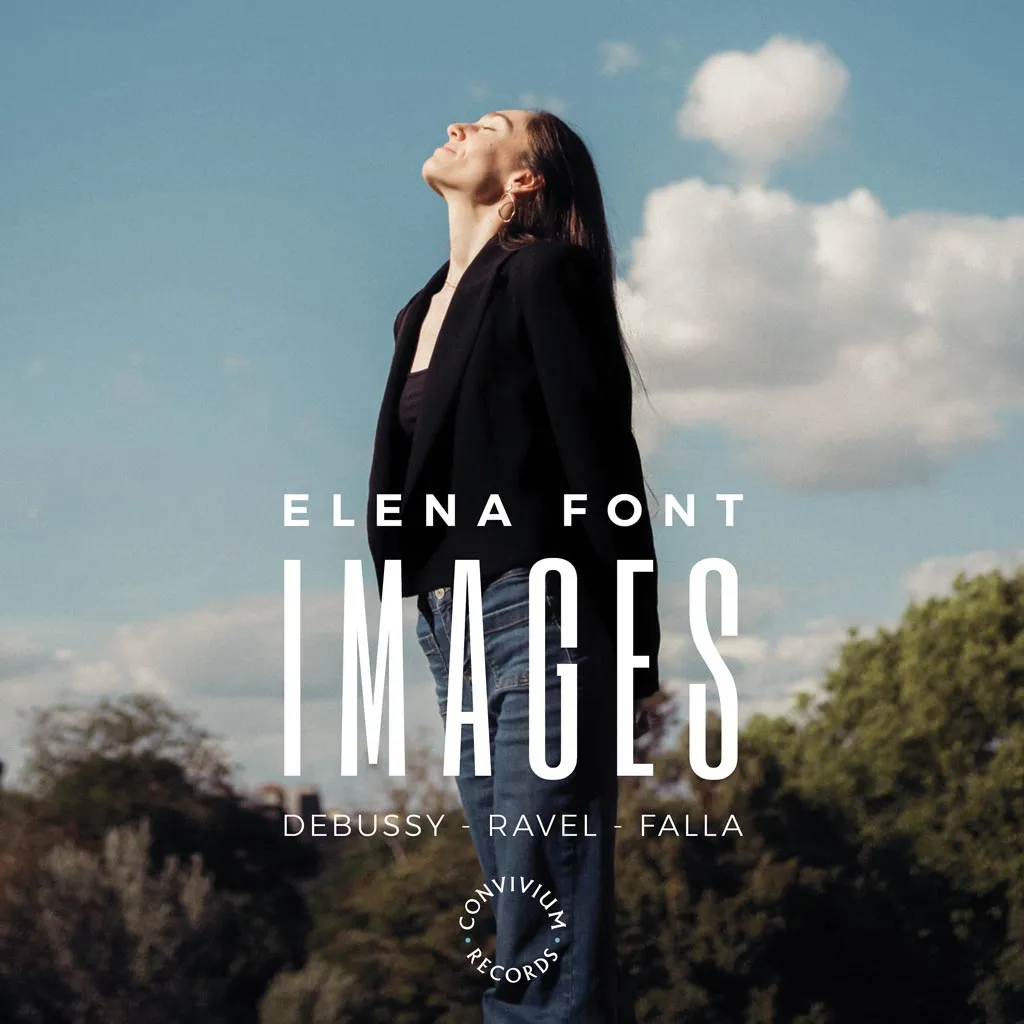
Despite her increasingly prominent career, this release is the solo debut recording of Spanish pianist Elena Font. Following training in Catalonia and Paris, Font has been closely identified with French music. Her new release underscores that connection by including both books of Debussy’s Images and Ravel’s Le tombeau de Couperin, in addition to excerpts from Falla’s El Amor brujo.
Font’s approach to the two sets of Images, those exquisite manifestations of Debussy’s piano aesthetic from 1901-07, strikes as at once completely original and perfectly characteristic. ‘Reflets dans l’eau’ emerges as finely calibrated terraces of sound. The sarabande of ‘Homage à Rammeau’ is taken at a very stately pace, one that beautifully highlights both the rhetorical and harmonic aspects of Debussy’s tribute to his Baroque predecessor. ‘Mouvement’ is thrillingly quick. The chordal sequences set against the whirling sparklers sound bracingly abstract in their detachment. ‘Cloches à travers les feuilles’ Debussy’s echo of the final piece of Liszt’s Swiss Année, is perhaps the most intimate of these evocations. Somehow, Fvont is able to shroud ‘Et la lune descend sur le temple qui fut’ in an atmosphere of antiquity. And if these fish display their fins with languor and dart with less energy than they seem to in many performances, surely we observe these ‘Poissons d’or’ on a very hot day.
The three Falla pieces from Love, the Magician – ‘Pantomime’, ‘The Magic Circle’ and the ‘Ritual Fire Dance’ – are deftly coloured and rhythmically piquant, with the perfect overlay of flamenco hauteur.
The impressionism of this Tombeau de Couperin consists of richly blended colours rather than the tiny pointillist brushstrokes often encountered in Ravel’s masterpiece, metaphorically closer to Manet and Seurat. Many highlights would have to include the insouciant Forlane, the precise but exuberant Rigaudon and the burgeoning energies of the Toccata. Font concludes her satisfying programme with a delicate, deeply felt performance of the Pavane for a Dead Princess. I look forward to hearing more from this original artist.
Review written by:
Review published in:
Other reviews by this author:
No other reviews found
