
In The Stillness – Review by Fanfare Magazine
“A lovely Christmas disc, and a nice balance of the known and lesser known, unfailingly well performed. The recording, made at St. Margaret’s, York, is exceptional, including how it captures the piano so well when it is used. Recommended.”
26th November 2025
In The Stillness – Review by Fanfare Magazine
“A lovely Christmas disc, and a nice balance of the known and lesser known, unfailingly well performed. The recording, made at St. Margaret’s, York, is exceptional, including how it captures the piano so well when it is used. Recommended.”
26th November 2025
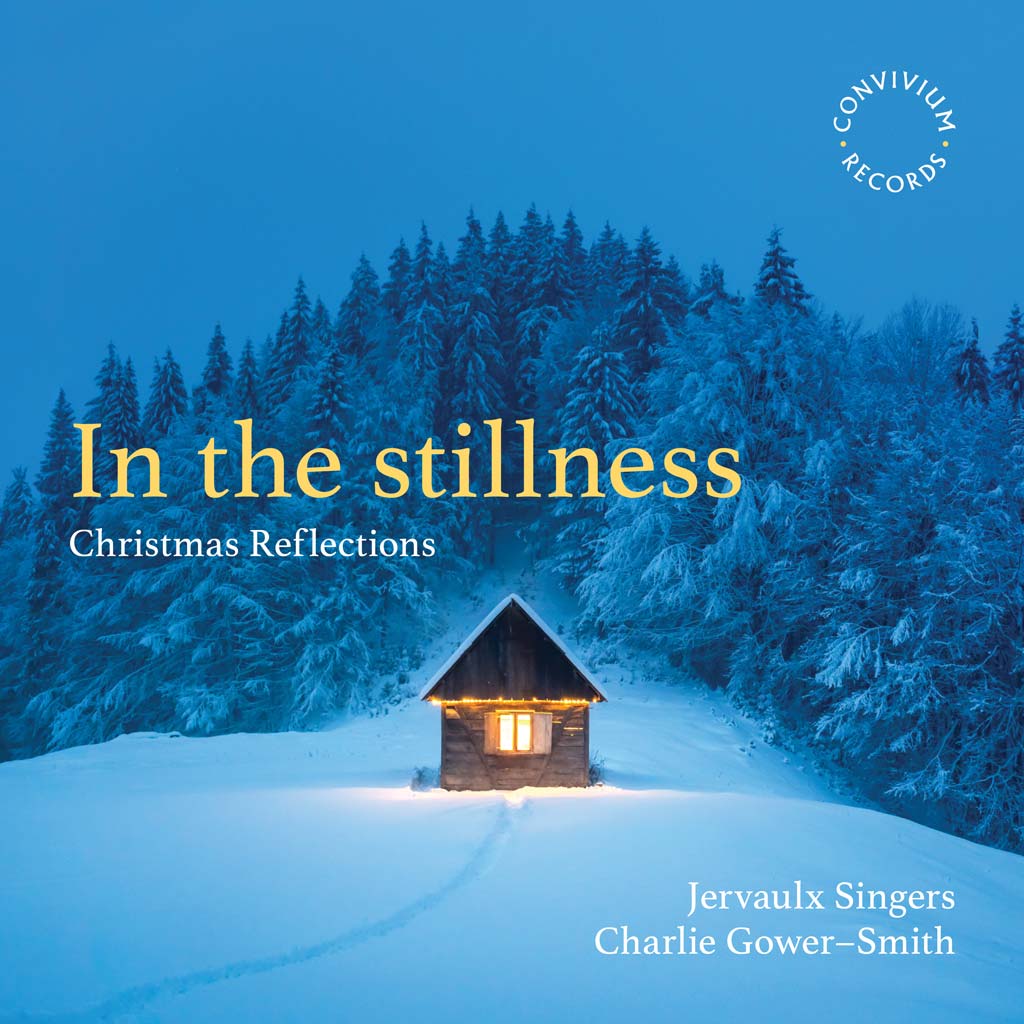
Listen or buy this album:
Christmastide looms, and we are in good company. One only needs to listen to the clarity of the opening line of Bob Chilcott’s The Shepherd’s Carol to know. As the voices enter one by one, the effect casts its Yuletide spell, not to be broken until around an hour later. There is a lovely purity, too, to Richard Rodney Bennett’s Puer Nobis (it is sung in English), perfectly balanced in all parts, the tempo ideal to allow the piece to unfold and yet still maintain its Yuletide sense of reflection. Octaves are well approached and points of arrival, while the harmonically richer Die Könige is simply lovely (including some well sung solo lines from within the choir).
Setting Martina Shepherd, Sally Beamish offers the titular track, the 2007 carol In the Stillness. There is considerable competition here: Tenebrae and Nigel Short take it somewhat quicker, losing some of the intimacy in comparison. On the Priory disc Natus, the Choir of Blackburn Cathedral offers a performance one might hear at evensong, the music echoing on. The closest to the Jervaulx Singers, and just taking the prize, is the performance on Resonus, by Sonoro.
The carol Jesus Christ the Apple Tree needs no introduction; its use of single lines mirrors the first track, and they appear with an equivalent choral unanimity here. One of the more intriguing pieces in the present program is an excerpt from Vanessa, “Must the Winter come so soon?” (Barber, with text by Menotti, who was no mean opera composer himself!). Beth Moxon is the fine mezzo soloist here. The setting of In dulci jubilo is both familiar and not so much: imitation forms its basis, and it is initially for unaccompanied female voices. This is a nice idea: Praetorius verse one, J. S. Bach verse two (where male voices arrive), and verses three and four by Robert Lucas Pearsall (1795–1856), with some lovely solo work from members of the choir. This is a lovely idea and works so well.
David Willcocks’ arrangement of a Basque Noël, The Infant King, a lullaby, is simply beautiful. And it is in its very simplicity that it succeeds, both in setting and in performance. The Fauré is often arranged: Anne Sofie von Otter left an unforgettably characterful version on her DG album Home for Christmas, for example. No bells here on Convivium, but this new version does boast the honeyed tenor of Gareth Meirion Edmunds, heard with pianist Alison Gill; truly special, and totally idiomatic from both.
Silent Night is ubiquitous at Christmas, heard here in a radiant a cappella performance. Sadly, the choral soloists are not named for this one; there are some lively moments, including a fabulous descant even more impressive for its restraint.
Many of the favorites are here: In the Bleak Midwinter is one, heard here in an appropriately restrained setting by Becky McGade (b. 1974), a definite rethinking given in a heartfelt performance by the Jervaulx Singers. And who doesn’t like John Rutter? The Nativity Carol is positively aglow, the gentle imitation caressed as if stroking the infant Jesus. The contrast to the vibrant rhythms of the male voices for Adam Lay Ybounden is visceral indeed; and how it works. Matthew Coleridge’s setting bursts with 20th-century life: this should be heard across the land. The explosion of joy at “Deo gratias” is infectious.
Th idea of “alternative” settings continues with Away in a Manger, this one by Reginald Jacques (1894–1968), very concentrated in speed and close harmonies, almost a prayer. And again, those sopranos keep tone throughout their range.
Nice to hear French in Debussy’s Noël des enfants qui n’ont plus de maisons; an anguished Noël if ever there was one (with the tricky piano part negotiated well here). John Hearne’s There’s a song in the air is just the right balm after that, closely harmonized and unaccompanied. We close, in French, with Adolphe Adam’s Cantique de Noël, Edmund Dutton the fine bass with Gill, a fine voice with a fine pianist. As the choir enters, the music seems to float. A satisfying close.
A lovely Christmas disc, and a nice balance of the known and lesser known, unfailingly well performed. The recording, made at St. Margaret’s, York, is exceptional, including how it captures the piano so well when it is used. Recommended.
Review written by:
Review published in:
Other reviews by this author:
Featured artists:
Featured composers:
Christmastide looms, and we are in good company. One only needs to listen to the clarity of the opening line of Bob Chilcott’s The Shepherd’s Carol to know. As the voices enter one by one, the effect casts its Yuletide spell, not to be broken until around an hour later. There is a lovely purity, too, to Richard Rodney Bennett’s Puer Nobis (it is sung in English), perfectly balanced in all parts, the tempo ideal to allow the piece to unfold and yet still maintain its Yuletide sense of reflection. Octaves are well approached and points of arrival, while the harmonically richer Die Könige is simply lovely (including some well sung solo lines from within the choir).
Setting Martina Shepherd, Sally Beamish offers the titular track, the 2007 carol In the Stillness. There is considerable competition here: Tenebrae and Nigel Short take it somewhat quicker, losing some of the intimacy in comparison. On the Priory disc Natus, the Choir of Blackburn Cathedral offers a performance one might hear at evensong, the music echoing on. The closest to the Jervaulx Singers, and just taking the prize, is the performance on Resonus, by Sonoro.
The carol Jesus Christ the Apple Tree needs no introduction; its use of single lines mirrors the first track, and they appear with an equivalent choral unanimity here. One of the more intriguing pieces in the present program is an excerpt from Vanessa, “Must the Winter come so soon?” (Barber, with text by Menotti, who was no mean opera composer himself!). Beth Moxon is the fine mezzo soloist here. The setting of In dulci jubilo is both familiar and not so much: imitation forms its basis, and it is initially for unaccompanied female voices. This is a nice idea: Praetorius verse one, J. S. Bach verse two (where male voices arrive), and verses three and four by Robert Lucas Pearsall (1795–1856), with some lovely solo work from members of the choir. This is a lovely idea and works so well.
David Willcocks’ arrangement of a Basque Noël, The Infant King, a lullaby, is simply beautiful. And it is in its very simplicity that it succeeds, both in setting and in performance. The Fauré is often arranged: Anne Sofie von Otter left an unforgettably characterful version on her DG album Home for Christmas, for example. No bells here on Convivium, but this new version does boast the honeyed tenor of Gareth Meirion Edmunds, heard with pianist Alison Gill; truly special, and totally idiomatic from both.
Silent Night is ubiquitous at Christmas, heard here in a radiant a cappella performance. Sadly, the choral soloists are not named for this one; there are some lively moments, including a fabulous descant even more impressive for its restraint.
Many of the favorites are here: In the Bleak Midwinter is one, heard here in an appropriately restrained setting by Becky McGade (b. 1974), a definite rethinking given in a heartfelt performance by the Jervaulx Singers. And who doesn’t like John Rutter? The Nativity Carol is positively aglow, the gentle imitation caressed as if stroking the infant Jesus. The contrast to the vibrant rhythms of the male voices for Adam Lay Ybounden is visceral indeed; and how it works. Matthew Coleridge’s setting bursts with 20th-century life: this should be heard across the land. The explosion of joy at “Deo gratias” is infectious.
Th idea of “alternative” settings continues with Away in a Manger, this one by Reginald Jacques (1894–1968), very concentrated in speed and close harmonies, almost a prayer. And again, those sopranos keep tone throughout their range.
Nice to hear French in Debussy’s Noël des enfants qui n’ont plus de maisons; an anguished Noël if ever there was one (with the tricky piano part negotiated well here). John Hearne’s There’s a song in the air is just the right balm after that, closely harmonized and unaccompanied. We close, in French, with Adolphe Adam’s Cantique de Noël, Edmund Dutton the fine bass with Gill, a fine voice with a fine pianist. As the choir enters, the music seems to float. A satisfying close.
A lovely Christmas disc, and a nice balance of the known and lesser known, unfailingly well performed. The recording, made at St. Margaret’s, York, is exceptional, including how it captures the piano so well when it is used. Recommended.
