
Dan Locklair: Sing to the World – Review by Fanfare
“These are engaging performances of engaging music. Locklair’s ability to shift compositional styles effectively is most appealing.”
1st May 2026
Dan Locklair: Sing to the World – Review by Fanfare
“These are engaging performances of engaging music. Locklair’s ability to shift compositional styles effectively is most appealing.”
1st May 2026
Listen or buy this album:
Dan Locklair’s music was enthusiastically received in my review of his choral music (with a Christmas twist) in Fanfare 47:6, and a fair amount of his music has been covered by other reviewers. Here, we have a succession of choral cycles followed by an “epitaph.”
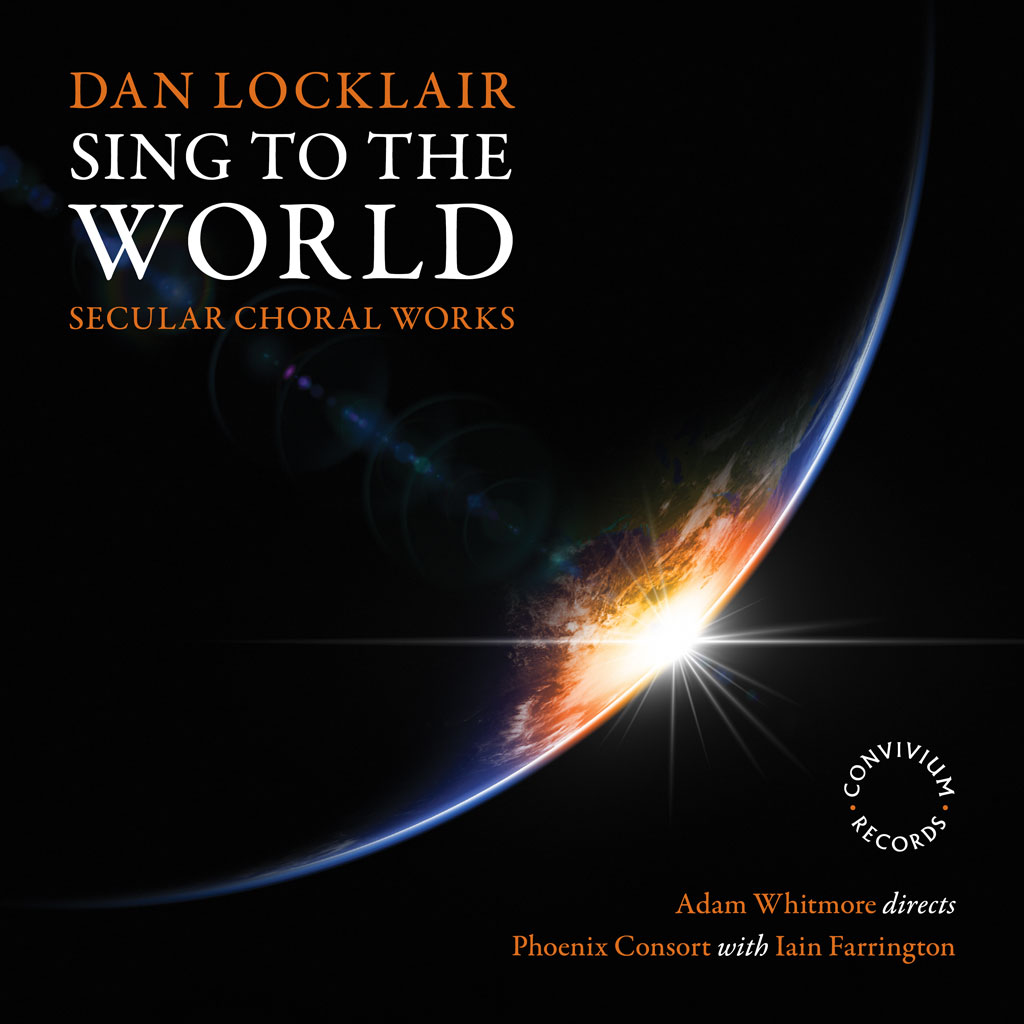
This release takes its title from Sing to the World, a “Choral Cycle in Five Movements in Celebration of Music,” which dates from 2019 and was premiered in 2022 in Charlotte, NC. It begins gently with “That Music Always Round Me,” a setting of Whitman that has an internal grace well realized by the Phoenix Consort. Henry Wordsworth Longfellow’s poem “The Singers” is gentle, harmonies gloriously enriched and yet, in this performance, allowing for linear clarity too. The close of the second stanza, “Playing the music of our dreams,” takes on especial resonance in Locklair’s setting. The concept is as beautiful as Locklair’s setting: “God sent his Singers upon the earth / With songs of sadness and mirth / that they might touch the hearts of men / And bring them back to heaven again.” Phillis Wheatley’s “A Hymn to the Morning” contains well-taken solo lines and exudes a distinct Spiritual vibe. Hymns are appropriately tight. The movement ends with a full setting of the African-American spiritual “My Lord, what a morning.” Antiphonal (polychoral?) techniques inform “Master of Music” (set to the text of a poem by Henry van Dyke), the music gently swaying in the wind. The text begins “Glory of architect” but as far as I can tell, this is traditional Christian rather than Freemasonic imagery at heart. The final song is “The Musical Ass” (Tomás Iriarte’s poem around a fable, just in case). The music is nicely light, the performance buoyant.
Two stand-alone settings follow: For This Is Love, a setting of the great Robert Frost’s poem “A Prayer in Spring” for SATB choir and piano from 2016, and Bond and Free, another setting of a Frost poem from 2002. Infinitely gentle, Locklair’s setting in For This Is Love strikes at Frost’s core. F Major, the key of Beethoven’s “Pastoral” Symphony, predominates. In Bond and Free, the composer contrasts the two concepts of the title, between thought and intuitive love, by centering the piece on “G,” with the minor mode for constrained thought and the major mode for the freedom of love. The piece exists for a long stretch on a generally low dynamic level, an interior rumination for unaccompanied SATB choir that, when it does rise up, is most effective and also holds soprano lines that refuse to break one: a constant factor of the Phoenix Consort’s excellence.
The three-movement The Lilacs Bloomed (2009, “A Choral Triptych for SAB Chorus and Piano”) is the second of the three song cycles presented here. It is based on the first stanzas of Whitman’s Memories of President Lincoln. Chaconne and organum inform the processes here, while the first and third movements are linked motivically as the first and third stanzas are linked motivically; The Battle Hymn of the Republic also plays a part. The first movement, “… I mourned” begins with the famous line “When lilacs last in the dooryard bloom’d.” The piano plays a major part here, in slow ripples against the expansively lyrical choral lines. The second movement, “… fallen star …,” is markedly more dramatic (the lower voices’ control at accents sought down to pianissimo and thence to crescendo is laudable). The robust piano is well caught here, too. Finally, “… a miracle …” is hushed and reverent. Each leaf of the lilac bush in the courtyard is a miracle, says the text, and the music is fervent enough to reflect this.
For Amber Waves (1992), a “spatial choral composition” for five SATB choirs, offers another side of Locklair. The opening is almost ambient. The text is from America the Beautiful (Lee Bates), with a nicely uplifting harmonic arrival on the key word “America.” The closing moments hint at the hymn tune MATERNA by Samuel Ward. The text of the 1982 piece, Tapestries is by Tagore. Scored for SSAATTBB, it offers a depth of experience hitherto unknown. The poem recognizes and hails the Divine Feminine, and piano is sporadically joined, here, by organ. The control of the singers of the Phoenix Consort is extraordinary.
The line “The Cloths of Heaven” (the title of the next piece) comes from W. B. Yeats and offers a different take on honoring the feminine. This is far more traditional in demeanor, a return to warm, even cozy harmonies, well balanced here.
While separate pieces, changing perceptions & EPITAPH (1987) come as a little group, joined at the hip by a titular conjunction. They are not to be heard consecutively in performance: the audience acknowledges the cycle changing perceptions, then EPITAPHcan begin. And while the text of the cycle is by identified poets, that of EPITAPH is from an old tombstone found in Norfolk, England.
Poetry by Carol Adler bookends the cycle changing perceptions itself. First, “what do we know about life,” piano and whistling of the choir setting the scene. “What do,” just those two words, initiate the poet’s enquiry; later, overlapping entries on the same question imply some urgency. The whistling returns; perhaps we know nothing. The text of “A.M.H.” is by Christine Teale Howes, and is a literary response to her own experience of stillbirth. Locklair’s music includes the tune, When Jesus Wept in the piano (“A.M.H” is the child, Athur McKeary Howes) in the piano. The tone is understandably downbeat, and Locklair’s approach is definitely “less is more” when it comes to musical activity. Harmonies tend toward resolution, reflecting the events, but avoid them conclusively. The piano also seems to act as a quiet tolling of bells. The tender, choir-only “Grief Poem” sets Joy Kogawa before John Gillespie McGee, Jr.’s “High Flight” opens out via piano glissando to a more optimistic world, coming full circle with an explosion of glissandos. Finally (or penultimately, depending on which way one looks at it), “…like the river that passes away,” a return to Adler, the lowercase of the title reflecting perhaps a certain flow. Nary a capital letter in the poem, either, which lights on “changing perceptions,” the flow of body mind as we get carried by the river of life. Again, warmth prevails, the whistling now nostalgic.
The EPITAPH is a surprise: jaunty, in the manner of a swift spiritual.
These are engaging performances of engaging music. Locklair’s ability to shift compositional styles effectively is most appealing.
Review written by:
Review published in:
Other reviews by this author:
Featured artists:
Featured composers:
Dan Locklair’s music was enthusiastically received in my review of his choral music (with a Christmas twist) in Fanfare 47:6, and a fair amount of his music has been covered by other reviewers. Here, we have a succession of choral cycles followed by an “epitaph.”
This release takes its title from Sing to the World, a “Choral Cycle in Five Movements in Celebration of Music,” which dates from 2019 and was premiered in 2022 in Charlotte, NC. It begins gently with “That Music Always Round Me,” a setting of Whitman that has an internal grace well realized by the Phoenix Consort. Henry Wordsworth Longfellow’s poem “The Singers” is gentle, harmonies gloriously enriched and yet, in this performance, allowing for linear clarity too. The close of the second stanza, “Playing the music of our dreams,” takes on especial resonance in Locklair’s setting. The concept is as beautiful as Locklair’s setting: “God sent his Singers upon the earth / With songs of sadness and mirth / that they might touch the hearts of men / And bring them back to heaven again.” Phillis Wheatley’s “A Hymn to the Morning” contains well-taken solo lines and exudes a distinct Spiritual vibe. Hymns are appropriately tight. The movement ends with a full setting of the African-American spiritual “My Lord, what a morning.” Antiphonal (polychoral?) techniques inform “Master of Music” (set to the text of a poem by Henry van Dyke), the music gently swaying in the wind. The text begins “Glory of architect” but as far as I can tell, this is traditional Christian rather than Freemasonic imagery at heart. The final song is “The Musical Ass” (Tomás Iriarte’s poem around a fable, just in case). The music is nicely light, the performance buoyant.
Two stand-alone settings follow: For This Is Love, a setting of the great Robert Frost’s poem “A Prayer in Spring” for SATB choir and piano from 2016, and Bond and Free, another setting of a Frost poem from 2002. Infinitely gentle, Locklair’s setting in For This Is Love strikes at Frost’s core. F Major, the key of Beethoven’s “Pastoral” Symphony, predominates. In Bond and Free, the composer contrasts the two concepts of the title, between thought and intuitive love, by centering the piece on “G,” with the minor mode for constrained thought and the major mode for the freedom of love. The piece exists for a long stretch on a generally low dynamic level, an interior rumination for unaccompanied SATB choir that, when it does rise up, is most effective and also holds soprano lines that refuse to break one: a constant factor of the Phoenix Consort’s excellence.
The three-movement The Lilacs Bloomed (2009, “A Choral Triptych for SAB Chorus and Piano”) is the second of the three song cycles presented here. It is based on the first stanzas of Whitman’s Memories of President Lincoln. Chaconne and organum inform the processes here, while the first and third movements are linked motivically as the first and third stanzas are linked motivically; The Battle Hymn of the Republic also plays a part. The first movement, “… I mourned” begins with the famous line “When lilacs last in the dooryard bloom’d.” The piano plays a major part here, in slow ripples against the expansively lyrical choral lines. The second movement, “… fallen star …,” is markedly more dramatic (the lower voices’ control at accents sought down to pianissimo and thence to crescendo is laudable). The robust piano is well caught here, too. Finally, “… a miracle …” is hushed and reverent. Each leaf of the lilac bush in the courtyard is a miracle, says the text, and the music is fervent enough to reflect this.
For Amber Waves (1992), a “spatial choral composition” for five SATB choirs, offers another side of Locklair. The opening is almost ambient. The text is from America the Beautiful (Lee Bates), with a nicely uplifting harmonic arrival on the key word “America.” The closing moments hint at the hymn tune MATERNA by Samuel Ward. The text of the 1982 piece, Tapestries is by Tagore. Scored for SSAATTBB, it offers a depth of experience hitherto unknown. The poem recognizes and hails the Divine Feminine, and piano is sporadically joined, here, by organ. The control of the singers of the Phoenix Consort is extraordinary.
The line “The Cloths of Heaven” (the title of the next piece) comes from W. B. Yeats and offers a different take on honoring the feminine. This is far more traditional in demeanor, a return to warm, even cozy harmonies, well balanced here.
While separate pieces, changing perceptions & EPITAPH (1987) come as a little group, joined at the hip by a titular conjunction. They are not to be heard consecutively in performance: the audience acknowledges the cycle changing perceptions, then EPITAPHcan begin. And while the text of the cycle is by identified poets, that of EPITAPH is from an old tombstone found in Norfolk, England.
Poetry by Carol Adler bookends the cycle changing perceptions itself. First, “what do we know about life,” piano and whistling of the choir setting the scene. “What do,” just those two words, initiate the poet’s enquiry; later, overlapping entries on the same question imply some urgency. The whistling returns; perhaps we know nothing. The text of “A.M.H.” is by Christine Teale Howes, and is a literary response to her own experience of stillbirth. Locklair’s music includes the tune, When Jesus Wept in the piano (“A.M.H” is the child, Athur McKeary Howes) in the piano. The tone is understandably downbeat, and Locklair’s approach is definitely “less is more” when it comes to musical activity. Harmonies tend toward resolution, reflecting the events, but avoid them conclusively. The piano also seems to act as a quiet tolling of bells. The tender, choir-only “Grief Poem” sets Joy Kogawa before John Gillespie McGee, Jr.’s “High Flight” opens out via piano glissando to a more optimistic world, coming full circle with an explosion of glissandos. Finally (or penultimately, depending on which way one looks at it), “…like the river that passes away,” a return to Adler, the lowercase of the title reflecting perhaps a certain flow. Nary a capital letter in the poem, either, which lights on “changing perceptions,” the flow of body mind as we get carried by the river of life. Again, warmth prevails, the whistling now nostalgic.
The EPITAPH is a surprise: jaunty, in the manner of a swift spiritual.
These are engaging performances of engaging music. Locklair’s ability to shift compositional styles effectively is most appealing.
