
Choral Contemplations – Article by Choir & Organ
Jonathan Whiting explores the ideas of silence, language and tuning that lie behind Choral Contemplations.
28th August 2026
Choral Contemplations – Article by Choir & Organ
Jonathan Whiting explores the ideas of silence, language and tuning that lie behind Choral Contemplations.
28th August 2026
Listen or buy this album:
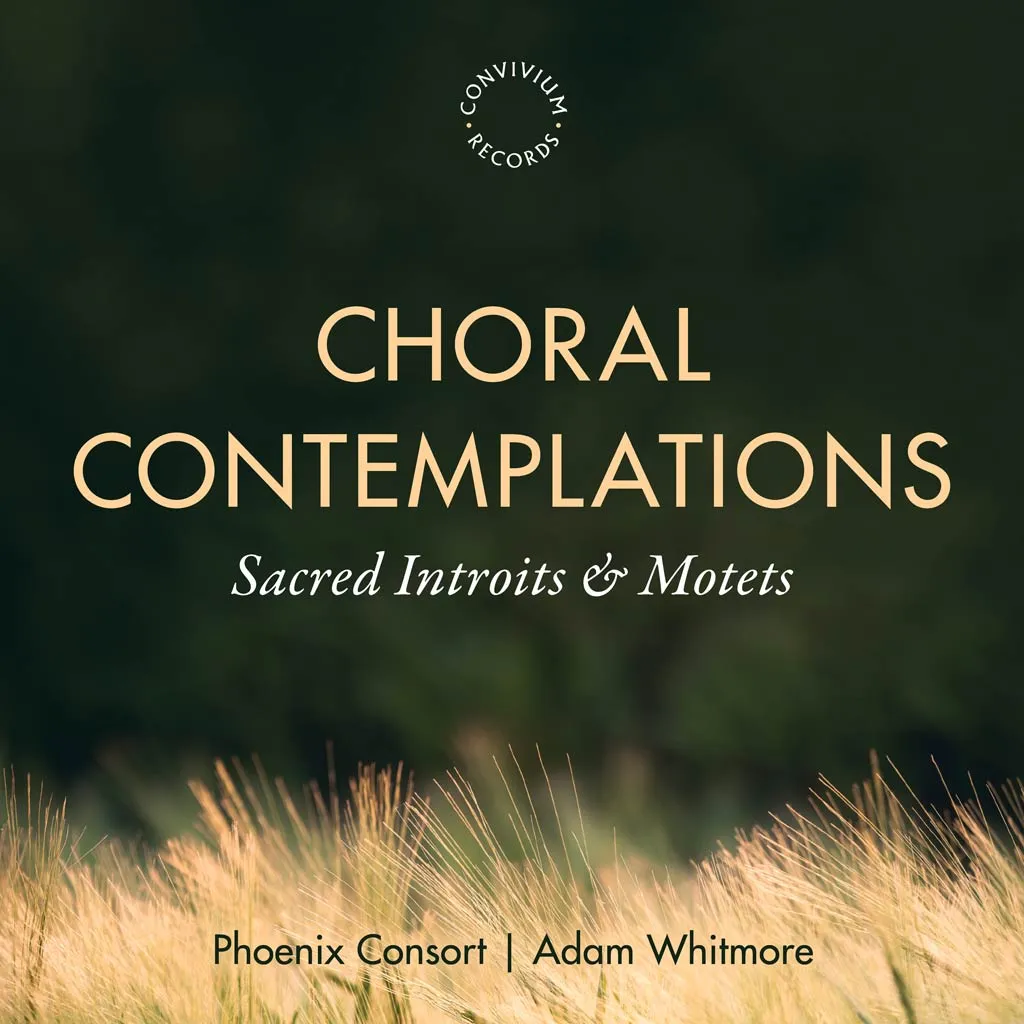
A new recording from Phoenix Consort brings together sacred choral music shaped by a shared philosophy: that composers should begin by listening closely to the words themselves. Jonathan Whiting explores the ideas of silence, language and tuning that lie behind Choral Contemplations.
‘Be still, and know that I am God.’ The words of Psalm 46 provide the title of one of the pieces on Choral Contemplations, a compelling new recording from Phoenix Consort and Convivium Records, and also point towards an idea that permeates through the album as a whole: that music can emerge from attentive listening, and can help uncover the meaning already present within words.
Almost all the texts on Choral Contemplations are Christian, drawn from the Psalms, the Gospels, the Song of Solomon, the liturgy and other devotional sources. Across 19 tracks, however, the composers are concerned with more than simply finding appropriate (and attractive) music for sacred texts. Their shared question is how music can connect with the words’ meaning and emotional sentiment.
That aspiration is neatly expressed in the familiar chorister’s prayer: ‘Grant that what we sing with our lips, we may believe in our hearts, and what we believe in our hearts, we may show forth in our lives’ (School of English Church Music). It describes a movement from expression to understanding and finally to action – a relationship between word, feeling and deed that has particular resonance for the musicians represented here.
Much of the thinking behind the album can be traced to Leon MacLaren, founder of what is now the School of Philosophy and Economic Science. Alongside his philosophical work, MacLaren had a strong interest in music and encouraged musicians within the School to investigate questions of sound, silence, tuning and the relationship between music and meaning.
In the mid-1960s, MacLaren began a long series of meetings with Shri Shantananda Saraswati, an Indian spiritual teacher and leading exponent of Advaita Vedanta, the non-dual philosophical tradition of Hinduism. MacLaren asked specifically about setting words to music. The advice was first to connect with the words themselves, then their meanings and implications, and finally their essential emotional import. The result was that many hours were spent studying and reflecting on the words to be set, before a note was even written. Hence the appropriateness of the title of this project. For a number of composers associated with the School, this became a practical compositional principle. A composers’ group formed in the early 1990s, bringing new pieces to MacLaren and to one another for discussion. The central question was whether the music genuinely reflected the deeper meaning of the words, rather than merely carrying them.
The group produced and discussed music on a substantial scale. Their texts were from a variety of traditions and were always of depth and profundity in keeping with the philosophy of non duality. Longer works included David Fletcher’s Song of Solomon, Bruce Ramell’s Gospel of St Thomas, David Stoll’s Bowl of Nous (from Corpus Hermeticum by Hermes Trismegistus), alongside a number of shorter pieces from the Upanishads, Platonic writings and the Rumi tradition. Some were performed in concerts organised by the group; others subsequently disappeared from view.
Choral Contemplations brings together music written over more than half a century by Derek Saunders, Adrian Green, David Fletcher, Noel Skinner, David Goymour, John-Paul Bowman, Rosemary Broadbent, Peter Blumsom and Bruce Ramell.
Saunders’ own Be still, and know that I am God provides one of the clearest examples of the compositional approach. During the Covid period, he heard Psalm 46 recited in church as a prayer, with the sentence progressively reduced towards its most fundamental words. The experience immediately suggested a musical setting.
The piece was written within a day or two. Saunders describes the process as trying ‘to listen to what the words were singing’: allowing the natural rhythm and shape of the language to determine aspects of melody, harmony and pacing. As in the spoken prayer that inspired it, the text is gradually pared back until only the word ‘Be’ remains.
Silence itself becomes a compositional resource in John-Paul Bowman’s Dum medium silentium. Its text begins ‘While all things were in quiet silence’, and Bowman incorporates silence directly into the structure of the piece. Rather than functioning merely as the absence of sound, pauses become part of the music’s expression and its response to the text.
The composers’ concern with listening also extends to tuning. MacLaren developed what he called the ‘Natural Octave’, an approach based on just intonation. Instead of the compromises of equal temperament, in which intervals are slightly adjusted so that an instrument can play in all keys, just intonation derives intervals from simple numerical relationships. A pure perfect fifth, for example, corresponds to the ratio 3:2.
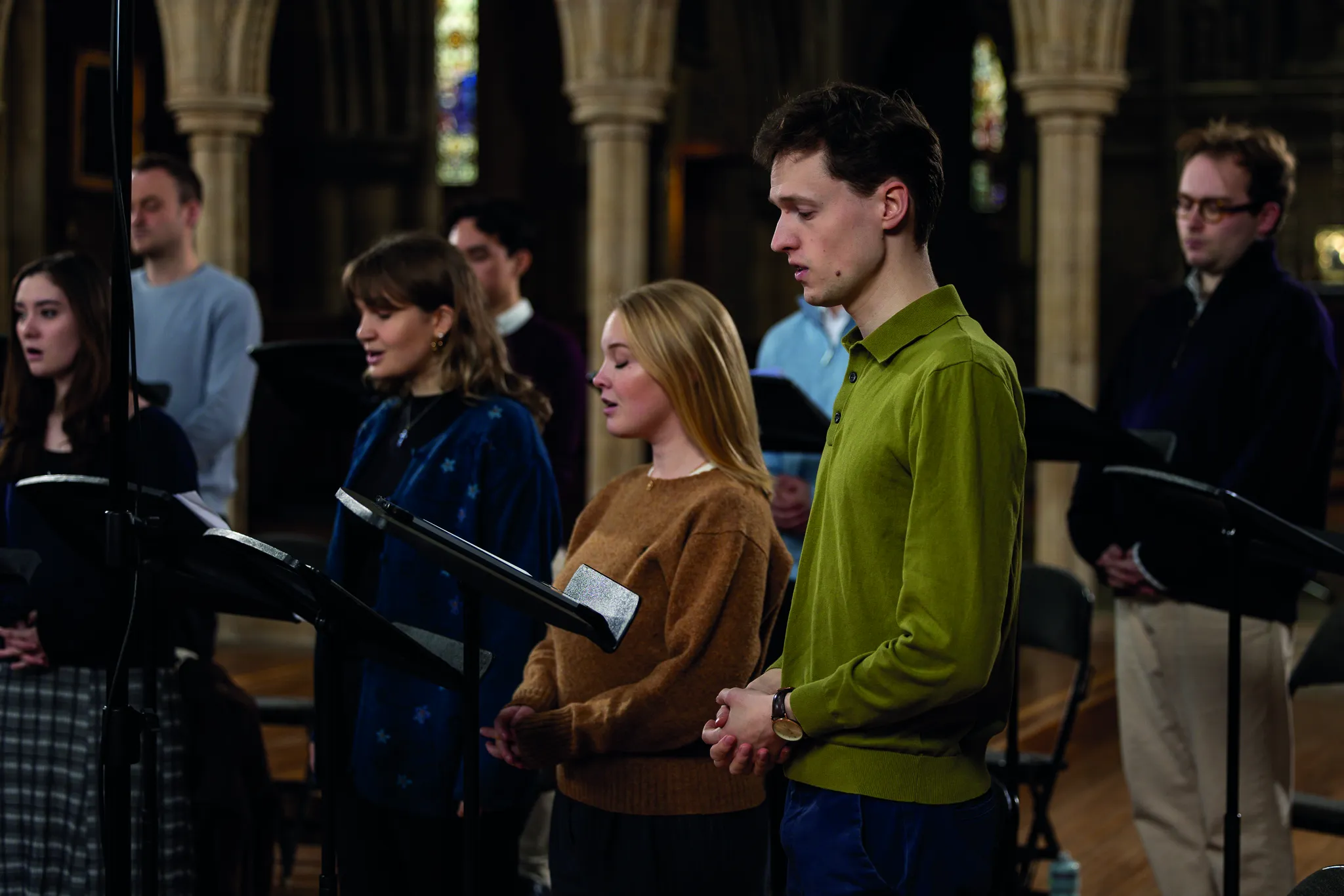
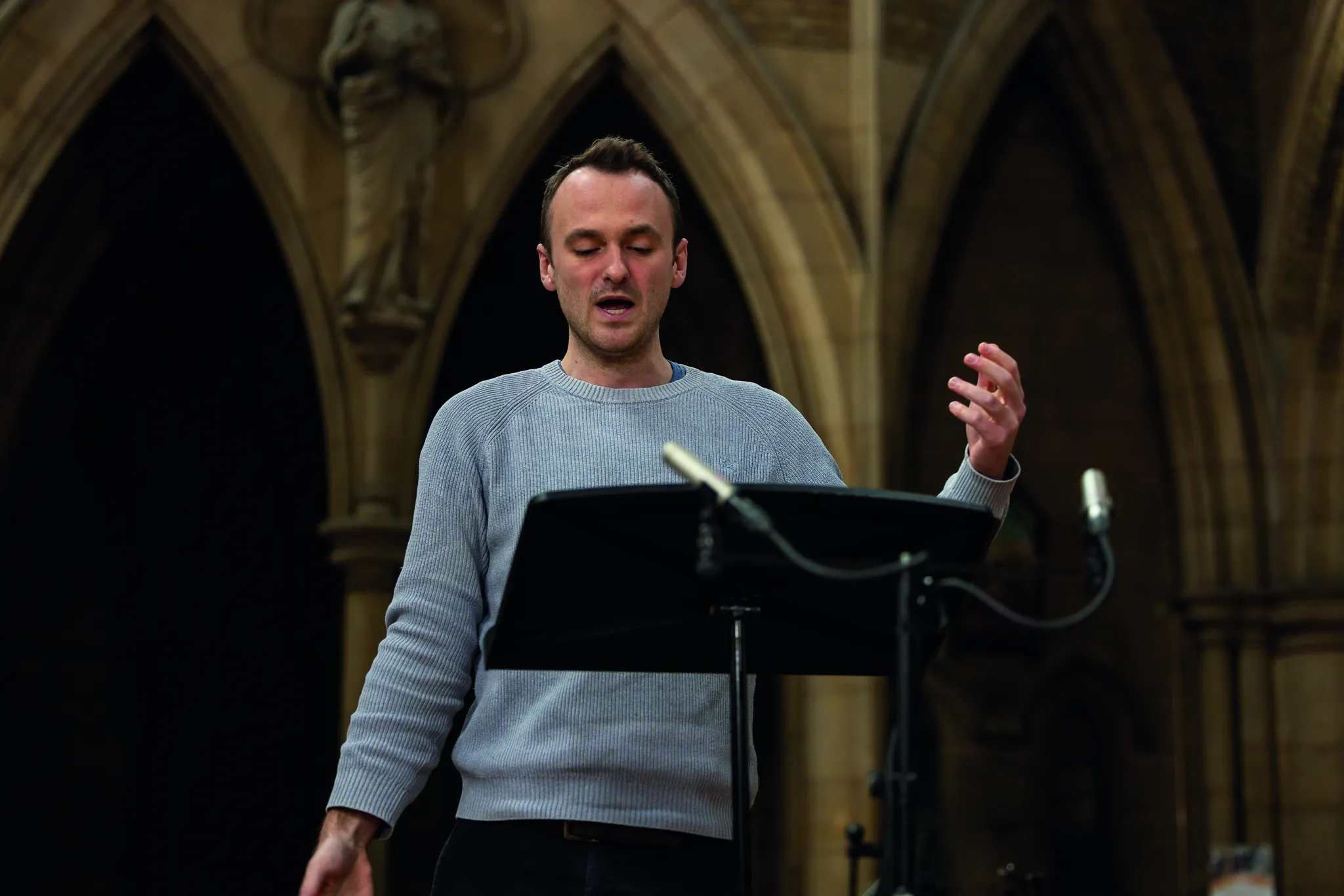
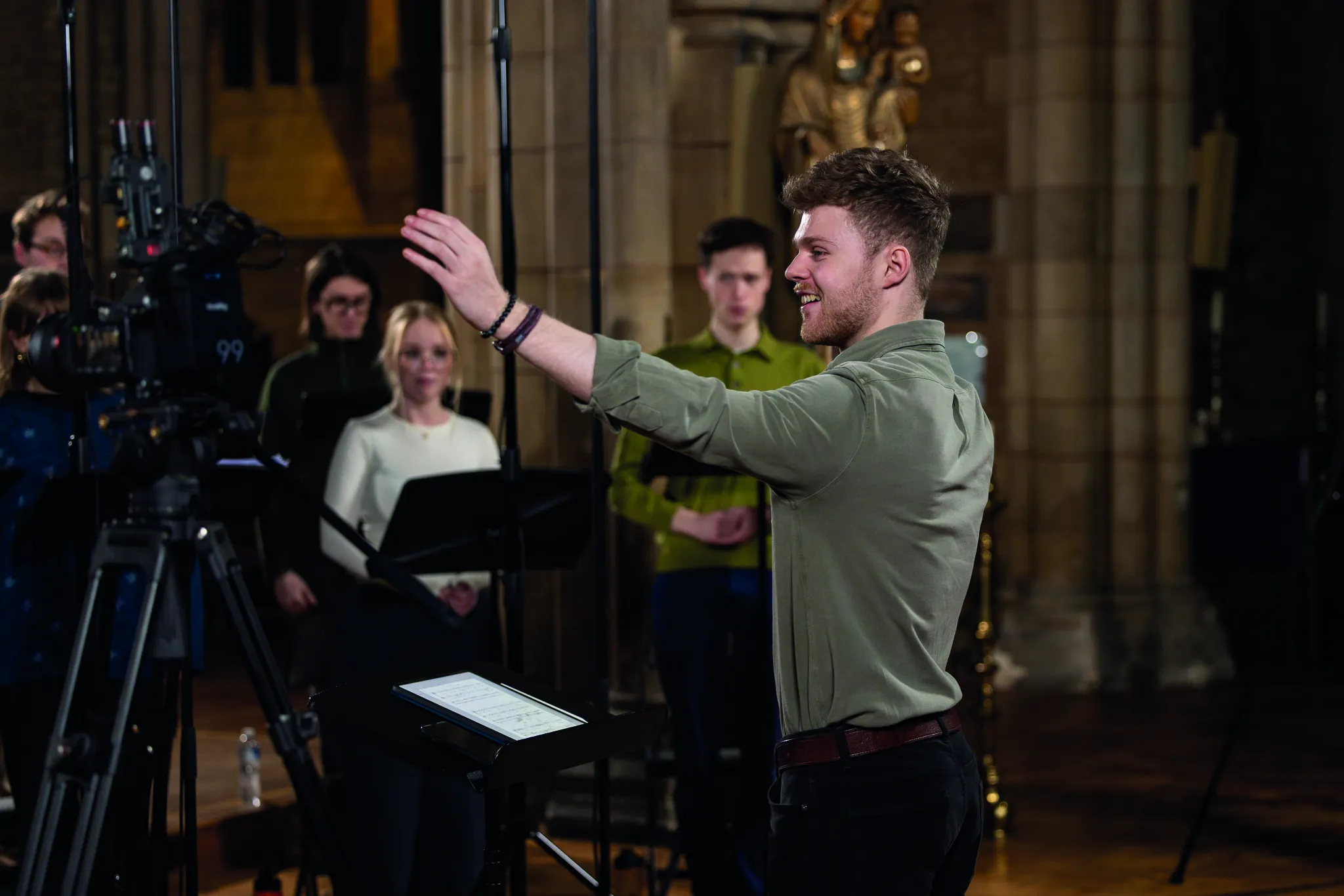
For unaccompanied singers this has practical consequences. Voices are not fixed to the equal-tempered pitches of a piano and can adjust notes in relation to one another. Several composers represented on the album – particularly Bruce Ramell, David Goymour and David Fletcher – explored these principles alongside modal writing that was purist in its approach – that is to say just intonation tuning will work throughout the piece. The album is performed by Phoenix Consort under its director Adam Whitmore. Founded at Durham University and now bringing together young singers from across the UK, the ensemble works across repertoire from Renaissance polyphony to contemporary choral music. Its recent activity has included a particular emphasis on new music, making it well suited to a recording in which a significant proportion of the repertoire has previously received little attention.
The 19 tracks also demonstrate the breadth of the project. Peter Blumsom’s What is man? dates from 1971. David Fletcher’s Set me as a seal, written in 1993, subsequently became the starting point for his larger Song of Songs. Noel Skinner’s For the Fallen, arranged here by Matthew Coleridge, originated as a setting for young voices at St James Junior School. Among the most recent works is Adrian Green’s Every good gift, written following the death of former St James headteacher Nicholas Debenham in 2025.
What links these pieces is not a single musical style – their harmonic languages, dates and original contexts vary considerably – but a compositional method founded on a symbiosis with the text: its rhythm, meaning, emotional weight and, in some cases, the absence of text.
Recorded at St John’s, Upper Norwood, Choral Contemplations places those ideas in the hands of a young vocal ensemble. The result is both a survey of a particular circle of composers and a record of an approach to sacred choral writing that has developed over several decades: beginning with words, listening for what they contain, and asking what music can reveal within them.
Review written by:
Review published in:
Other reviews by this author:
No other reviews found
A new recording from Phoenix Consort brings together sacred choral music shaped by a shared philosophy: that composers should begin by listening closely to the words themselves. Jonathan Whiting explores the ideas of silence, language and tuning that lie behind Choral Contemplations.
‘Be still, and know that I am God.’ The words of Psalm 46 provide the title of one of the pieces on Choral Contemplations, a compelling new recording from Phoenix Consort and Convivium Records, and also point towards an idea that permeates through the album as a whole: that music can emerge from attentive listening, and can help uncover the meaning already present within words.
Almost all the texts on Choral Contemplations are Christian, drawn from the Psalms, the Gospels, the Song of Solomon, the liturgy and other devotional sources. Across 19 tracks, however, the composers are concerned with more than simply finding appropriate (and attractive) music for sacred texts. Their shared question is how music can connect with the words’ meaning and emotional sentiment.
That aspiration is neatly expressed in the familiar chorister’s prayer: ‘Grant that what we sing with our lips, we may believe in our hearts, and what we believe in our hearts, we may show forth in our lives’ (School of English Church Music). It describes a movement from expression to understanding and finally to action – a relationship between word, feeling and deed that has particular resonance for the musicians represented here.
Much of the thinking behind the album can be traced to Leon MacLaren, founder of what is now the School of Philosophy and Economic Science. Alongside his philosophical work, MacLaren had a strong interest in music and encouraged musicians within the School to investigate questions of sound, silence, tuning and the relationship between music and meaning.
In the mid-1960s, MacLaren began a long series of meetings with Shri Shantananda Saraswati, an Indian spiritual teacher and leading exponent of Advaita Vedanta, the non-dual philosophical tradition of Hinduism. MacLaren asked specifically about setting words to music. The advice was first to connect with the words themselves, then their meanings and implications, and finally their essential emotional import. The result was that many hours were spent studying and reflecting on the words to be set, before a note was even written. Hence the appropriateness of the title of this project. For a number of composers associated with the School, this became a practical compositional principle. A composers’ group formed in the early 1990s, bringing new pieces to MacLaren and to one another for discussion. The central question was whether the music genuinely reflected the deeper meaning of the words, rather than merely carrying them.
The group produced and discussed music on a substantial scale. Their texts were from a variety of traditions and were always of depth and profundity in keeping with the philosophy of non duality. Longer works included David Fletcher’s Song of Solomon, Bruce Ramell’s Gospel of St Thomas, David Stoll’s Bowl of Nous (from Corpus Hermeticum by Hermes Trismegistus), alongside a number of shorter pieces from the Upanishads, Platonic writings and the Rumi tradition. Some were performed in concerts organised by the group; others subsequently disappeared from view.
Choral Contemplations brings together music written over more than half a century by Derek Saunders, Adrian Green, David Fletcher, Noel Skinner, David Goymour, John-Paul Bowman, Rosemary Broadbent, Peter Blumsom and Bruce Ramell.
Saunders’ own Be still, and know that I am God provides one of the clearest examples of the compositional approach. During the Covid period, he heard Psalm 46 recited in church as a prayer, with the sentence progressively reduced towards its most fundamental words. The experience immediately suggested a musical setting.
The piece was written within a day or two. Saunders describes the process as trying ‘to listen to what the words were singing’: allowing the natural rhythm and shape of the language to determine aspects of melody, harmony and pacing. As in the spoken prayer that inspired it, the text is gradually pared back until only the word ‘Be’ remains.
Silence itself becomes a compositional resource in John-Paul Bowman’s Dum medium silentium. Its text begins ‘While all things were in quiet silence’, and Bowman incorporates silence directly into the structure of the piece. Rather than functioning merely as the absence of sound, pauses become part of the music’s expression and its response to the text.
The composers’ concern with listening also extends to tuning. MacLaren developed what he called the ‘Natural Octave’, an approach based on just intonation. Instead of the compromises of equal temperament, in which intervals are slightly adjusted so that an instrument can play in all keys, just intonation derives intervals from simple numerical relationships. A pure perfect fifth, for example, corresponds to the ratio 3:2.
For unaccompanied singers this has practical consequences. Voices are not fixed to the equal-tempered pitches of a piano and can adjust notes in relation to one another. Several composers represented on the album – particularly Bruce Ramell, David Goymour and David Fletcher – explored these principles alongside modal writing that was purist in its approach – that is to say just intonation tuning will work throughout the piece. The album is performed by Phoenix Consort under its director Adam Whitmore. Founded at Durham University and now bringing together young singers from across the UK, the ensemble works across repertoire from Renaissance polyphony to contemporary choral music. Its recent activity has included a particular emphasis on new music, making it well suited to a recording in which a significant proportion of the repertoire has previously received little attention.
The 19 tracks also demonstrate the breadth of the project. Peter Blumsom’s What is man? dates from 1971. David Fletcher’s Set me as a seal, written in 1993, subsequently became the starting point for his larger Song of Songs. Noel Skinner’s For the Fallen, arranged here by Matthew Coleridge, originated as a setting for young voices at St James Junior School. Among the most recent works is Adrian Green’s Every good gift, written following the death of former St James headteacher Nicholas Debenham in 2025.
What links these pieces is not a single musical style – their harmonic languages, dates and original contexts vary considerably – but a compositional method founded on a symbiosis with the text: its rhythm, meaning, emotional weight and, in some cases, the absence of text.
Recorded at St John’s, Upper Norwood, Choral Contemplations places those ideas in the hands of a young vocal ensemble. The result is both a survey of a particular circle of composers and a record of an approach to sacred choral writing that has developed over several decades: beginning with words, listening for what they contain, and asking what music can reveal within them.
Review written by:
Review published in:
Other reviews by this author:
No other reviews found
